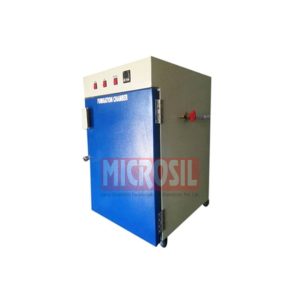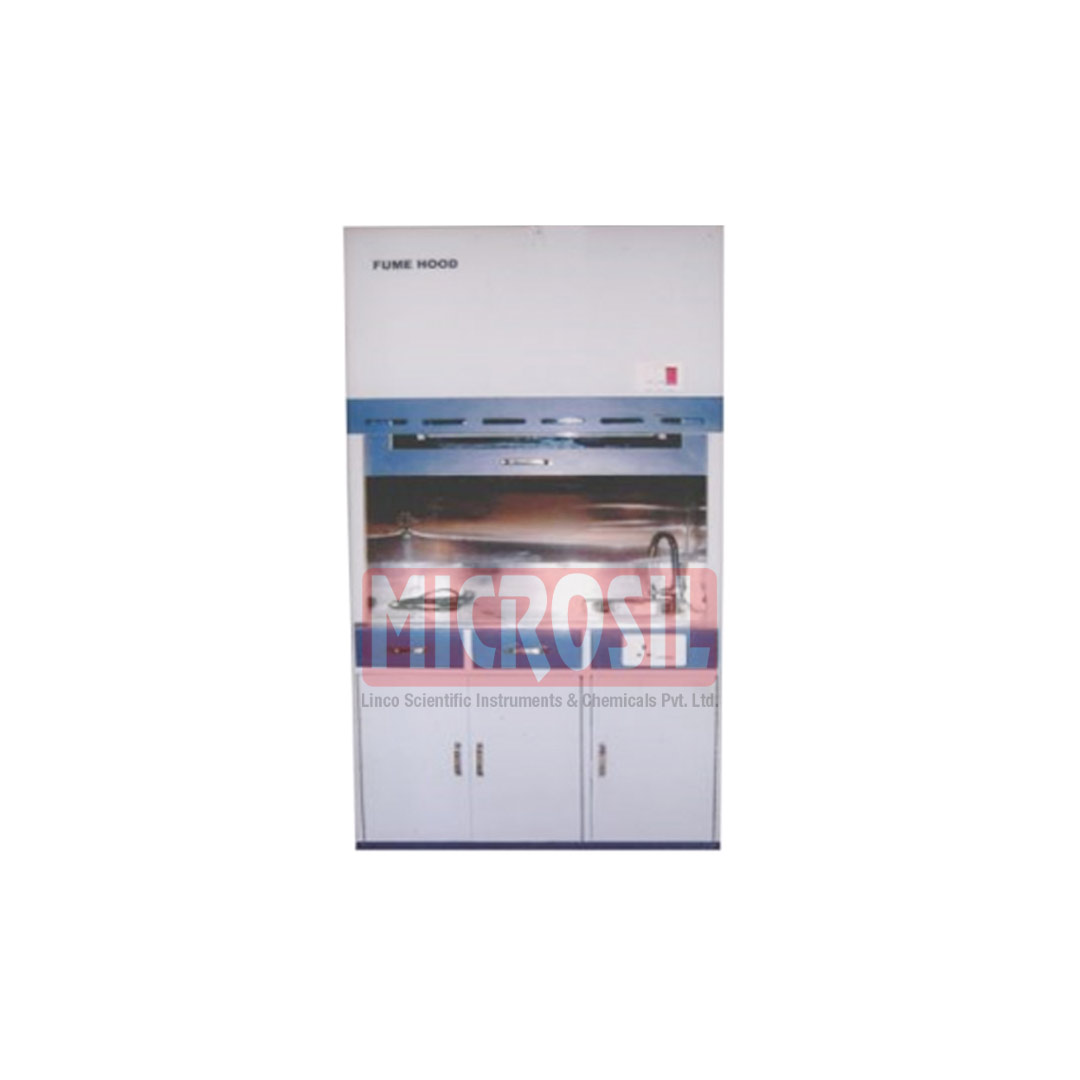

Fabricated out of thick wooden board. It designed so as to throw out all toxic/harmful vapors & fumes thus protecting costly instruments and the persons working in the lab. Outer is finished with sunmica and inner epoxy painted. Working table top is acid/alkali resistant and a small wash basin with connections provided for inlet and outlet of water. The Front door moves vertically up and down with concealed counter balanced weights. The unit is fitted with fluorescent light and a gas cock for gas/air supply.The front facing panel is fitted with 15/5 Amp socket with switches for exhaust system and fluorescent light. To work On 220Volts A.C. 50Hz supply.
Also Available in:
- A) S Powder Coated
- B) Stainless Steel
What are Fume Hoods?
A fume hood is a kind of ventilation cabinet that is used in laboratories to conduct experiments with heavy chemicals, dangerous materials and poisonous gases. It works by confining noxious gases, vapours or dust and then releasing them through a network of ducts so as not to put at risk the people working in the laboratory with harmful substances.
Working with these Fume Hoods
Fume hoods function by pulling air out of the laboratory and into an enclosure. This polluted air is either cleaned with a filter and returned to the room or pushed outside. Some of the main parts of a fume hood include:
- The sash is a movable glass window which can be adjusted to control the opening through which air enters into the hood. It acts as a physical barrier between the user and what is in the fume chamber.
- The function of an airfoil is to guide airflow smoothly into a hood so that turbulence is minimized while preventing contaminants from getting out.
- Baffles are panels located at the back of this device which direct its flow uniformly thus preventing areas where poisonous substances could gather.
- An exhaust system removes contaminated air from this device either by filtering it or venting outside the building.
- A work surface refers to the part within this device where experiments are carried out on.
Benefits of Fume Hoods
Fume hoods play a critical role in laboratory safety by:
- Protection: Products containing and removing hazardous substances, and fume hoods reduce the risk of exposure to toxic chemicals, vapors, or fumes.
- Prevention from Cross-Contamination: Fume hoods help to prevent the spread of contaminants within the laboratory, maintaining a clean and safe working environment.
- Air Quality Maintenance: By expelling or filtering harmful substances, fume hoods contribute to maintaining the overall air quality in the laboratory.
Suggestions for Using a Fume Hood
he following tips are meant to maximize the use of a smoke cupboard:
- Height Should Be Maintained: To guarantee optimal airflow and protection, drop the sash to the required level usually 18 inches.
- Work at Least Six Inches inside the Hood: Keep all equipment and chemicals a minimum of six inches from the front edge of the hood to contain contaminants.
- Minimize Flow Blockages: Proper ventilation should be ensured by not placing big machines or items directly in front of airflow vents.
- Routine Maintenance and Inspection: This involves checking that there is adequate air movement; filters may also need changing on a regular basis as part of maintenance measures for fume hoods.
- Do Not Store Chemicals Within The Cabinet: Chemical storage areas should only be used when conducting experiments because if this is done wrongly dangerous accumulation might occur.
These are some of the points that show the working and the main features of the fume hoods.
Therefore, if you want to work with the best products, then it is important to work with the best Fume Hood Manufacturer in India. MICROSIL INDIA, turned out the leading company in providing the best products and services.