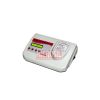
Use and Benefits of Microprocessor PH Meters
Microprocessor PH Meter Manufacturers:- Microprocessor pH meters are widely used in various industries and applications where pH measurement is crucial. These are some common uses and benefits:
Laboratories and Research: This is an essential tool in scientific research, pharmaceutical labs, chemical analysis, and environmental testing. They provide accurate pH measurements for experiments, quality control, and data analysis.
Water Quality Testing: PH meters play a vital role in monitoring and maintaining water quality in industries, municipal water treatment plants, swimming pools, aquariums, and hydroponics. They help ensure proper pH levels for optimal water conditions.
Food and Beverage Industry: PH measurement is critical in food and beverage processing to ensure product quality, safety, and consistency. Microprocessor pH meters are used to monitor acidity levels in beverages, dairy products, sauces, and other food items.
Agriculture and Soil Testing: PH measurement is essential in agriculture for determining soil acidity or alkalinity. Microprocessor pH meters help farmers and agronomists assess soil conditions, adjust nutrient levels, and optimize crop growth.
Educational Institutions: PH meters are widely used in educational settings, such as schools and universities, for teaching chemistry, biology, and environmental science. They allow students to perform pH experiments and understand the principles of pH measurement.
How Microprocessor PH Meters Work
Microprocessor pH meters consist of several components that work together to provide accurate pH readings:
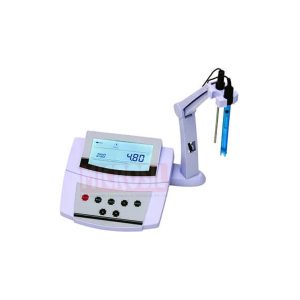
PH Electrode: The pH electrode is a glass electrode with a special membrane that responds to changes in hydrogen ion concentration in the solution. It generates a small voltage that is proportional to the pH of the solution.
Temperature Sensor: Many pH meters feature a built-in temperature sensor. Temperature affects pH measurements, so the temperature sensor allows for automatic temperature compensation, ensuring accurate pH readings across different temperatures.
Microprocessor: The microprocessor is the central component of the pH meter. It receives the voltage signal from the pH electrode and converts it into pH values using calibration data and algorithms. The microprocessor also performs temperature compensation calculations to adjust the pH readings accurately.
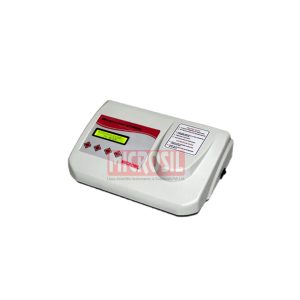
LCD Display: The pH meter is equipped with a liquid crystal display (LCD) that shows the pH value of the solution being measured. The display may also show other information, such as temperature, calibration status, and battery level.
Calibration Controls: Microprocessor based pH meters require calibration to ensure accuracy. Calibration controls, usually buttons or dials, allow users to calibrate the meter using pH buffer solutions of known pH values.
During operation, the user dips the pH electrode into the solution being tested. The microprocessor processes a voltage signal that the electrode produces that is proportional to the pH level. The microprocessor then displays the pH value on the LCD screen, taking into account temperature compensation and calibration settings.
In summary, microprocessor – based pH meters utilize advanced digital technology and algorithms to provide accurate and reliable pH measurements. Microsil India offering benefits such as precision, user-friendly operation, and temperature compensation for enhanced accuracy.
| Model | LIC-PH2 | |
| Range | 0.00 to 14.00 | |
| Resolution | 0.02 | |
| Accuracy | ± 0.02 | |
| mv(ORP) | ||
| Range | 500.0 to + 500.0 mv | |
| Resolution | 0.2 mv | |
| Temperature | ||
| Range | 5 to 70°c | |
| Compensation Manual | ||
| Calibration Point | Two | |
| Display | 16×2 LCD | |
| Power | 220 Volt ± 10%, 50 Hz | |
| Function Keys | CAL, 4pH, 7pH | |
| Memory Storage | NA | |
| Dimensions | 275x187x94mm (Approx) | |
| Accessory | Electrode Stand, Combined Glass Electrode, Buffer Tablets: 4.00 and 7.00, 100ml Bottle: 2, Instruction Manual | |