
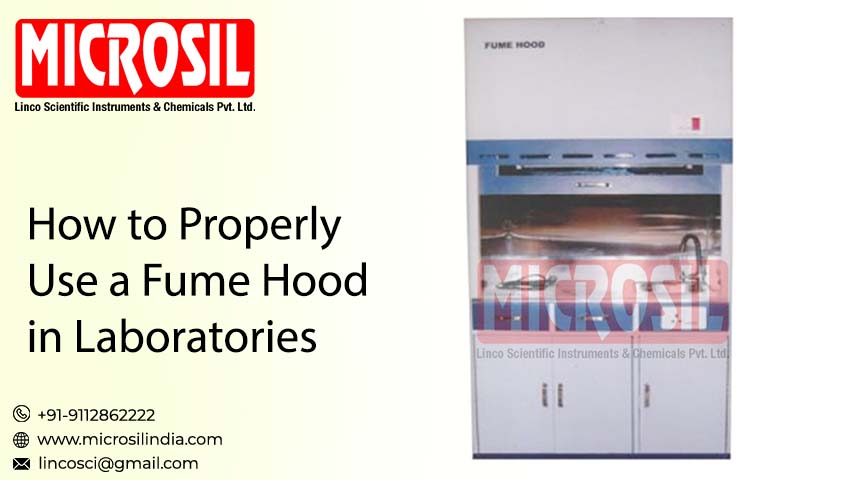
A fume hood is a laboratory protective device that expels and modifies harmful vapors, gases, and other particles to ensure the user’s safety. A fume hood is crucial to safety precautions as well and helps devise proper laboratory practices while ensuring maximum productivity during experiments. In the upcoming segment, we shall further discuss how to properly use the fume hood alongside its other important aspects and requirements.
What is a Fume Hood?
Fume hoods are also referred to as chemical hoods which means that it is an enclosed structures that is ventilated with a movable glass door to minimize the user’s exposure to hazardous chemicals. Fume hoods contain an exhaust airflow system, which takes in the contaminated air from the room and releases it outside. Most fume hoods are used in Biochemical and pharmaceutical laboratories for the purpose of safely working with substances that can be toxic or have the ability to catch fire easily.
What Role Does a Fume Hood Have in Safety Measures?
- Safeguard Against Poisonous Exhalations: Damaging solvents when inhaled can lead to damaging fumes that can be avoided with proper use of a fume hood covering.
- Contaminants Control: Helps in avoiding workplace pollution by containing dangerous materials.
- Combustion Control: Reduces the risk of fire by keeping explosive or flammable substances contained.
- Regulator Standards: Helps meet the laboratory standards established by health and safety authorities around the world.
Fume Hood Structure
- Workbench: The horizontal platform utilized for performing any experimental procedures.
- Fume Baffle: It is the part of the fume hood that focuses on keeping the air movement consistent by channeling smoke toward the ventilator.
- Hood Sash: It is a protective device made of glass allowing sight while ensuring the safety of the user.
- Fume Exhauster: This is the part of the complex whose job is to disperse the toxic air outside the room or the facility in question.
- Airfoil: This is meant to facilitate the unhindered flow of air by eliminating turbulence.
Modern Use of Fume Hoods in Laboratories
1. Setting Fume Hoodie Up for Use: If you are handling flammable, emitting gases, smoke, chemicals, and substances. Additionally deem these types of materials too hazardous for you. Never use a Fume Hoodie for simply storage or a workspace for non-hazardous items.
2. Checking and Setting the Fume Hood
- To be sure the hood is working properly, run a test with an airflow indicator.
- Any form of vent blockage needs to be checked and dealt with.
- Ensure the sash glass trim does not have any issues of being broken or damaged.
3. Placing the Equipment Correctly
- To Prevent any fumes from flooding out the hut should be set at quite an appropriate distance which is at least 6 inches.
- Do not crowd together any of the items to prevent any airflow from interfering with their efficiency.
- Use stands to raise and support any large equipment for enhanced airflow supply.
4. Set Appropriate Sash Height
- Limit the sash as much as possible to ensure safety concerning the hut which is usually how much it is tagged for.
- Take into consideration that putting the sash too high can cause containment to be broken and can have a strain on the airflow.
- When working stay low and do not position yourself too much inside the hut.
5. Set Controls for Efficiency and Mess Free Area
Avoid spending or placing anything outside of the hut also avoid sudden jerks or shaking the hut most importantly any flammable substances that react with each other should be kept separately.
6. Ventilation Must Be Proper
- Always make sure that the ventilation of the exhaust fan isn’t defective.
- Ensure air vents and baffles are not covered.
- Hoods are not open flames unless there’s a warning against it.
7. Your Waste Has To Be Disposed Properly
- Having any illegal disposal of hazardous materials is discouraged.
- Fume hoods should never have waste or chemicals in them once the experiment is over.
8. The Sash Has To Be Closed After The Use
- To maintain the containment, lower the sash down fully when not in use and wish to conserve energy.
- Any residual chemicals will have to be cleaned along with the workarea itself.
9. Fume Hood Tips Maintenance
- Regular checks along with airflow testing must be done over time.
- Sash and work surfaces require cleaning up every now and then.
- Ducts and filters would need servicing from time to time.
Conclusion
The fume hood is an essential apparatus that makes your working environment both safe and efficient. By correctly answering the questions posed in the preceding sections, such as the proper position of equipment, the height of the sash, and ventilation, you can lessen the danger encountered when using hazardous chemical substances. Microsil India, the authoritative and well-respected Fume Hood Manufacturer, provides cutting-edge equipment that fulfills accurate laboratory security measures. An ideal fume hood is robustly constructed and includes apparatus tailored to complement other laboratory equipment from a company like Microsil.